





















To write is to make something out of being human. For generations, storytelling has been rooted in human experience, emotion, and connection. As artificial intelligence becomes increasingly prominent in the writing and publishing industry, that foundation becomes unstable.
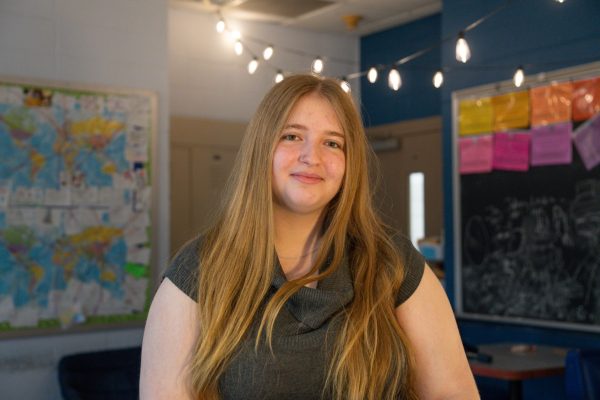
In exclusive interviews with The Critic, debut author Rhea Rainwater and established YA novelist Tricia Levenseller spoke candidly about the ever-growing presence of AI in writing and publishing. They also addressed a concern shared by many young and aspiring writers: what does the future of writing look like in an age of artificial intelligence? While both acknowledge the uncertain future of writing, they encouraged writers to stay true to themselves and not let the unknown stop them from doing what they love.
“I think, like any other industry, the prospect of AI is terrifying,” Rainwater said, referencing concerns that extend beyond publishing alone. “As an author all I can do is continue to write stories that take risks and push back against powers and systems that try to erase human voices.”
At the same time, writing has never really been a stable career. “Being an author is a turbulent career, and nothing is guaranteed,” Rainwater noted. “Like with anything, it helps to be realistic about your goals and what you hope to achieve.”
Even with that reality, neither author sees that instability as something that should stop people from writing. “A wise man once said to me: ‘If you knew you were never going to publish, would you still write?’” Levenseller reflected. “If the answer is yes, then being an author is for you.” Rainwater echoed that same mindset. “As for the future of publishing, there are a lot of unknowns, but it’s my passion to write books anyways,” she said, emphasizing that writing exists beyond its outcome or success.
That way of thinking matters even more as artificial intelligence continues to evolve. “I’d like to say that we’ll always be able to tell which books are written with AI so we can all avoid them, but I know technologies only improve over time. Regardless, I know that machines cannot write with any heart or experience, so I hope that authors will always be needed,” Levenseller said.
That distinction ultimately comes down to what writing is at its core. A quote often attributed to Ernest Hemingway states, “There is nothing to writing. All you do is sit down at a typewriter and bleed.” Whether the attribution is exact or not, this idea reflects what both authors suggest. Writing is inherently human, shaped by emotion, imagination, and lived experiences.
Even so, the growth of AI adds a new layer of uncertainty for young writers like me. I’ve always loved reading and writing, and it’s something I’ve thought about pursuing. However, it’s already a difficult path, and watching AI grow only makes that dream feel harder to hold onto. While I believe people would eventually recognize what’s lost if writing became dominated by AI — real connection and emotion — that doesn’t make the present any less unsettling. Even now, it’s visible in schools, where students turn to AI for convenience, often at the cost of learning how to articulate their own thoughts. It may be faster, but it risks stripping writing of what makes it meaningful in the first place. Still, hearing from authors navigating these changes firsthand offers some reassurance.
“Don’t let the unknown stop you from writing,” Rainwater urged. “Writing is such a gift, reading is such a gift. There is someone who needs your words more than you probably needed to write them, and sharing them is the most powerful part of it all.”
“Writing isn’t necessarily for the audience. Writing is for the writer. It’s a way to feed our souls and connect with other people. That’s never going to change,” Levenseller concluded.