































Critic Rating: 7/10
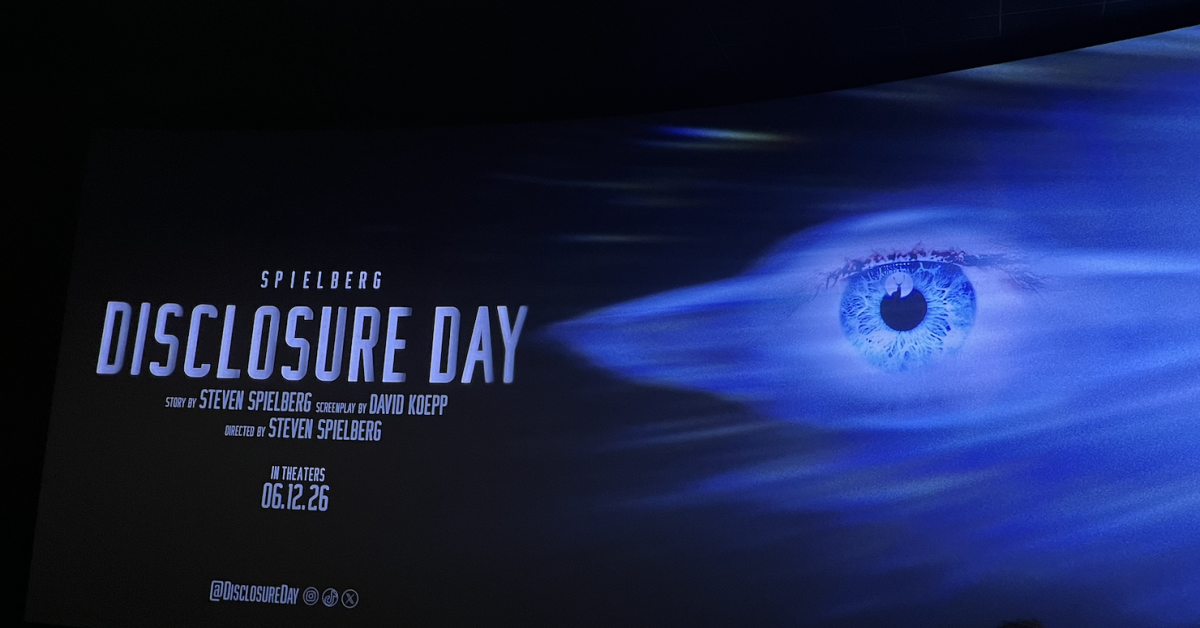
What would happen if humanity learned, with certainty, that we were not alone? Would the discovery of extraterrestrial life bring society together or would it completely pull us apart? Steven Spielberg’s Disclosure Day attempts to answer these questions through the story of two whistleblowers racing to expose a truth that powerful forces want buried. As the film moves between government secrecy, religious uncertainty, and supernatural discovery, it becomes less about whether aliens exist and more about whether humanity could survive knowing that they do.
For Spielberg, alien stories have rarely been only about aliens. In films like Close Encounters of the Third King, E.T., and War of the Worlds, extraterrestrial life forces humans to confront how small, fragile, and unprepared they are in the face of the unknown. Disclosure Day clearly wants to belong in that lineage, but its most interesting ideas often struggle against a plot that keeps moving before they can land.
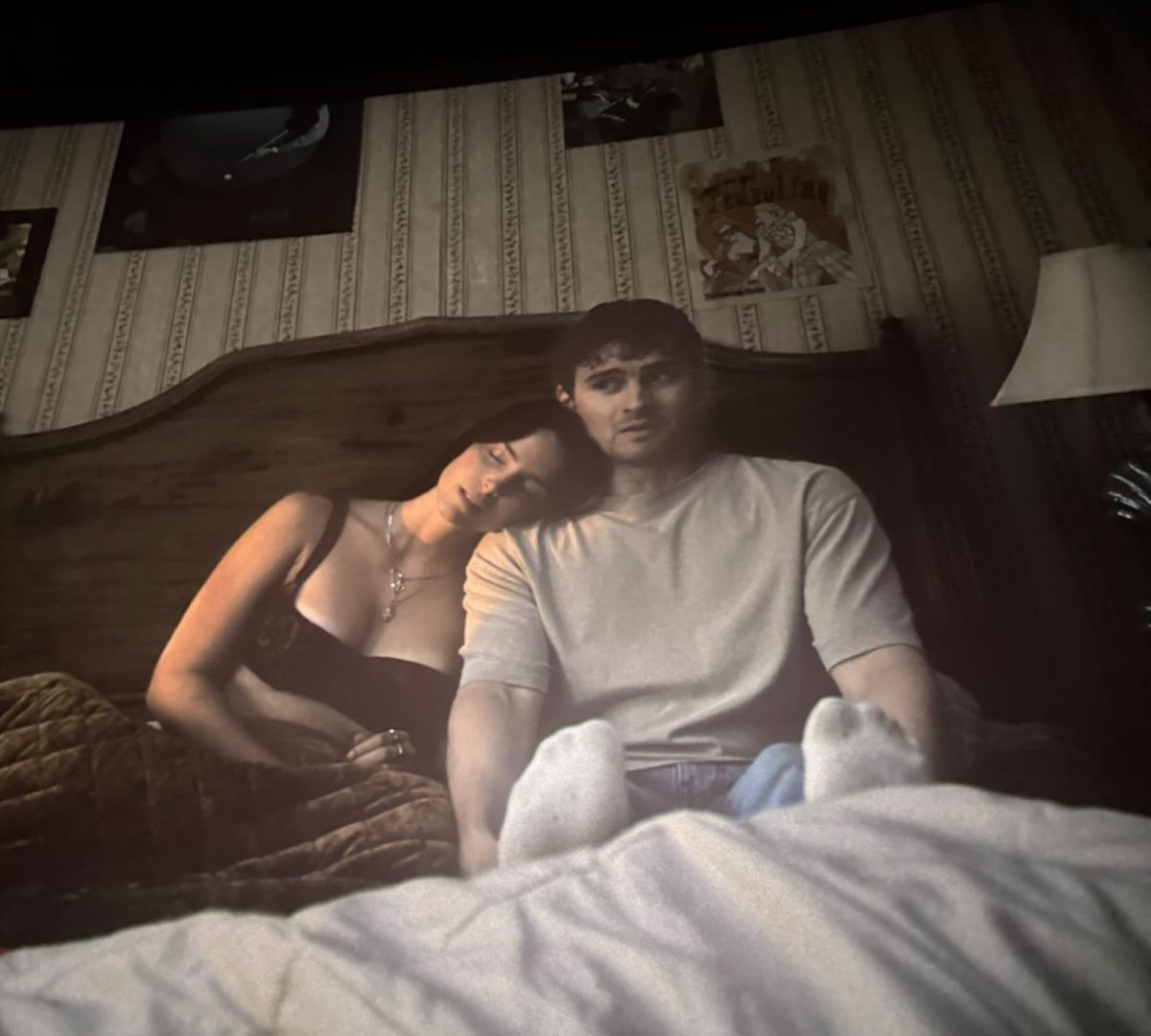
The film follows Daniel Kellner, a cybersecurity specialist played by Josh O’Connor, and Margaret Fairchild, a Kansas City meteorologist played by Emily Blunt. Kellner has previously worked to hide classified proof of extraterrestrial life, but when the film begins, he is on a mission to leak that information to the public. Fairchild, on the other hand, is pulled into the truth in real time after she begins developing strange abilities during a weather broadcast. From there, the film becomes a chase between these two whistleblowers and the powerful non-government agency trying to stop them, with each escape and confrontation revealing another piece of the larger mystery. That mystery is one of the strongest elements of the film: the audience isn’t just waiting for characters to survive, but trying to understand what exactly is being hidden, who already knows, and why disclosure has been treated as a threat rather than a revelation.
That chase structure gives Disclosure Day energy and action, but it also creates one of the film’s biggest problems. For a movie about extraterrestrial life, the alien elements sometimes felt strangely secondary and unexplained. Whenever the supernatural comes to the forefront it often feels more like a convenient plot device than a fully developed part of the world. Characters seemed to gain abilities, understand technology, or escape danger whenever the scene required it, but the film rarely paused enough to explain any of the rules behind what was happening.
One of the most interesting ideas in the film is its treatment of religion. If belief in a supernatural deity is one of the foundations of human civilization, what happens when proof of extraterrestrial beings forces people to reconsider their place in creation? Is God only on this planet? Disclosure Day raises these questions in a way that feels genuinely compelling. This kind of question separates this movie from films that simply use aliens as spectacle. The argument for keeping the information secret is not only political– it is also spiritual. The fear is that disclosure could cause a total descent into chaos by destroying the beliefs that hold society together. However, this theme is also underdeveloped. The religious tension is one of the most explicit and original ideas in the movie, but it fades from the story as fast as it is introduced. After one side character seems to answer the film’s biggest spiritual questions almost too easily, the movie moves on, leaving what could have been a really interesting conflict feeling strangely unfinished. The movie didn’t need a neat answer. It raises the question as if it will reshape the story, then treats it like a temporary obstacle the characters can talk their way past.
Visually, Disclosure Day is stunning. Spielberg and cinematographer Janusz Kaminski use the camera in unexpected ways, including upside-down angles, reflections, and harsh lighting. These choices add to the supernatural feeling of the film and make even ordinary spaces feel unstable.
At its best, the comedy in Disclosure Day comes from the disorder of the situation itself, and is especially effective through Emily Blunt’s character. As Margaret is first pulled into the truth, her confusion and reactions make the humor feel grounded in the situation rather than forced onto it. In our theater, these moments clearly landed, at several moments our whole theater laughed. However, as the film grows darker and the stakes become more emotional, the comedic style starts to feel misplaced. The jokes sometimes interrupted the tension instead of relieving it.
The same problem appears in the film’s sci-fi elements. Many of the supernatural abilities and advanced technologies are never really explained or consistently utilized. Characters seem able to do whatever the scene requires, only for those abilities to be ignored later. This makes the world of the film feel less complete than it should. The film relies a lot on ambiguity, which can be powerful especially in a movie about humanity confronting the unknown. But when the ambiguity is so distracting it feels more like you missed a prequel, it loses its effect.
The film is stronger when it connects its alien premise to censorship and institutional control. Daniel’s decision to leak classified information pushes the audience to question who has the right to decide what the public can handle. Its real-world relevance comes from the fear that truth can be edited or hidden by people who claim they are protecting us. In that sense, the film’s conflict is not between humans and aliens, but between ordinary people and the institutions that control information. Still, the film often tells us that the truth is dangerous more than it shows us why. So much of the movie consists of characters giving emotional speeches about what disclosure could destroy, but the film spends less time developing what that destruction would actually look like.
Character relationships have a similar issue. Nearly all of the main characters have some kind of connection to each other, and while it is satisfying to see them come together by the climax, the journey there felt rushed. Some relationships appear to deepen over only a few scenes, without enough development to make that closeness believable. The film also reveals pieces of characters’ pasts as seemingly random moments, but they felt like shortcuts, allowing the movie to explain character dynamics through vague history rather than present-day interaction.
Thankfully, the acting helps hold the film together. As Margaret Fairchild, Emily Blunt brings fear, confusion, strength, and emotional depth to a character who could have easily become just another person swept into a conspiracy plot. Blunt makes Margaret’s transformation feel human even when the writing around her becomes underdeveloped. She is especially effective because she gives the film both its humor and emotional center.
The frustrating part is that the film’s final thirty minutes are genuinely spectacular. As the different storylines and abilities finally come together, Disclosure Day becomes mesmerizing in a way that feels like peak Spielberg. The final act gives the film the sense of scale and magic it had been reaching for all along. At the same time, that makes the rest of the movie harder to reconcile with the ending. The conclusion is powerful enough to prove what the film was capable of, but it also highlights how rocky the journey there has been.
Ultimately, Disclosure Day is ambitious, visually impressive and often engaging, but it is also uneven. Its best ideas are fascinating: religion confronting alien life, journalism battling secrecy, and humanity struggling to understand its place in a much larger universe. But all these ideas feel crowded together preventing them from reaching their full impact. Spielberg gives us moments of wonder, fear, and spectacle, and Blunt gives the film its emotional center. Still, by the end, we are left wanting a version of Disclosure Day that trusted its biggest questions enough to explore them more deeply.