































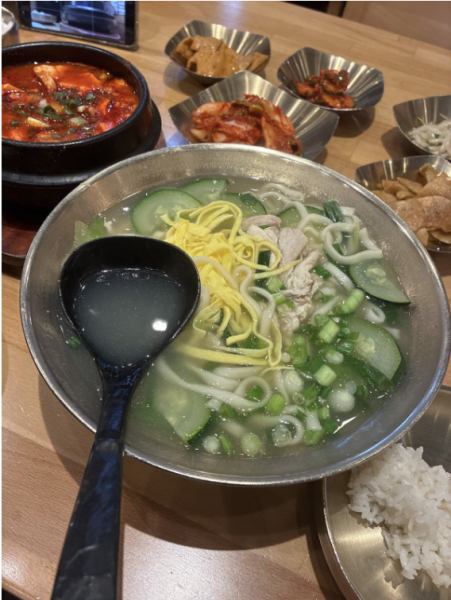
 As the temperature drops, we need to find a way to warm our bodies and our souls. Daesung Korean Noodle provides the exact comfort you need during these chilly days. Located near 162nd St on 45th Ave, students from Townsend Harris can ride the Q74 and Q65 to enjoy a meal with friends after a long day of school.
The interior of the noodle house is down to earth; the chairs and tables are all made of a light matching wood, and upon walking in, you are met with a breath of warm air. The servers can speak both English and Korean, allowing for easy communication. There are enough seats for many to stay and enjoy.
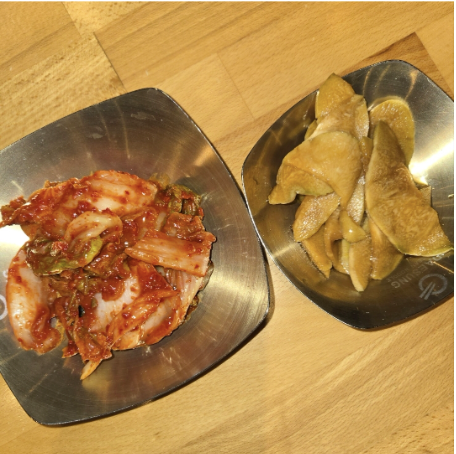 Before our meals arrived, we were served with multiple dishes of “banchan,” or traditional Korean side dishes. The kimchi (left) and imitation fishcakes (right) were the ones that stood out the most. Kimchi
is a traditional Korean dish of spicy, pickled cabbage. We particularly enjoyed this kimchi because it was spicy, yet sweet. If this is your first time trying kimchi, be warned that it can be quite spicy and sour, we recommend pairing it with the rice.
Our second side dish was the imitation fishcakes. They had the typical savory taste that many traditional Korean imitation fishcakes have; however, the ones at Daesung also had a hint of soy sauce to them, creating a salty flavor that added to the overall savoriness. They were squishy, soft, and cold, however it’s typical for this dish to be served cold, as banchan in general is served cold to provide a refreshing taste and complement the main dishes.
When we were ready to order, we simply had to press a button on the walls by our table, which called over a waiter to take our orders.
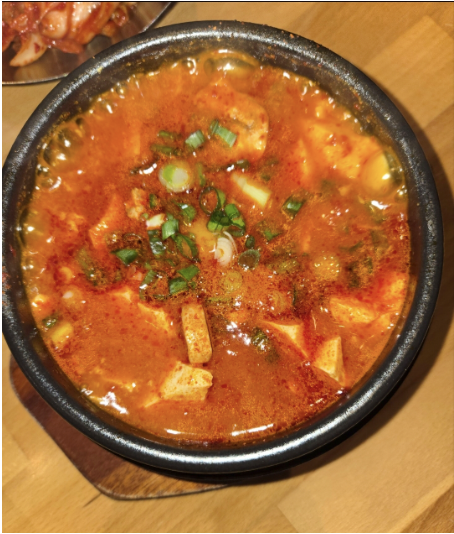
Soondubu Jjigae: $15.99
Critic Rating: 8.5/10
The first dish we tried was the soondubu jjigae. Soondubu jigae is a spicy Korean stew typically composed of tofu, beef, raw egg, mushrooms, onions, and other vegetables. The dish is normally served in a hot stone pot and a side of rice. The soondubu jigae came with a generous serving of tofu pieces, mushrooms, a raw egg yolk, and scallions on top.
The addition of raw egg tends to alarm people who have not had soondubu jigae before, however it has a purpose: the egg prevents the broth from becoming too spicy, and can be eaten when fully cooked after leaving it in the broth for some time to poach. Others also tend to stir the egg into the broth to thicken it, leaving it up to customer preference as to how they want to incorporate it into the dish. We decided to leave the egg in the broth to poach for some time to enjoy it with the rice once it is fully cooked. This allowed the egg to have a rich and diverse flavor from the spices with a tinge of spiciness from the stew, while also having a general creamy consistency.
Many people also tend to be alarmed by the intense red color of the stew. Though, soondubu jigae is actually not that spicy, and the stew is typically a strong red color due to the large amount of gochujang, or chilli paste. Unlike other dishes, there wasn’t a definite way to decide the spice level of the stew, as many Koreans do not consider it a spicy dish, though it is labeled as “spicy” on the menu. The plain taste of tofu absorbs most of the spice in tandem with the egg. The soondubu jigae was actually less spicy than other establishments, and pairing it with the offered rice made it the perfect warm and hearty main dish. The combination of spices, scallions, and mushrooms gave the dish a more sweet taste that mixed with the slight spice of the stew. The only downside was that unlike other Korean restaurants, the soondubu jigae at Daesung did not come with any meat, which left the dish mostly made up of tofu that we quickly finished .
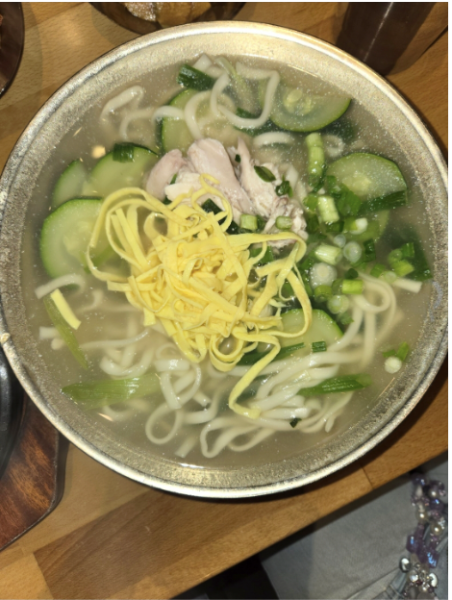
Dak Soondubu Kalguksu: $18.99
Critic Rating: 9/10
The second dish we tried was the dak soondubu kalguksu, or chicken soondubu kalguksu. Kalguksu is a Korean noodle soup made with flat wheat, hand-cut and hand-pulled noodles, served in a hot and savory broth. There were different types of kalguksu to choose from, including spicy seafood, vegetables, and beef. The chicken kalguksu came with a heap of chicken, egg that was fried and cut into thin strips, slices of zucchini, green onion, and of course, the wheat noodles. In addition, they allow you to choose your spice level from regular to extra spicy. We ordered the regular kalguksu, and it was a little plain, however, once paired with the banchan, you unlock an array of flavor profiles. The guksu, or noodles, were thick, bouncy, and chewy. The broth was hearty and comforting, warming up even the coldest of souls. The chicken was a little tough, but soaking it in the broth softened it out, making each bite savory and your taste buds screaming for more.
If you’re someone who’s sensitive to spice, we recommend asking for a separate bowl to mix some of the kalguksu with the jjigae broth. The slightly salty chicken broth paired with the strong jjigae helped subside the spice to create a warm tangy soup full of flavor.
Daesung Korean Noodle is the perfect place to stop by for a comforting meal with friends or family. The welcoming atmosphere with ambient music, kind staff, and homey decor adds to the general experience. It’s a great place to try out Korean cuisine if it is your first time, as they offer many traditional and simple Korean dishes at reasonable prices that aren’t spicy. As the weather gets colder by the day, indulging in warm and homey Korean soul food will surely fill you up!