





















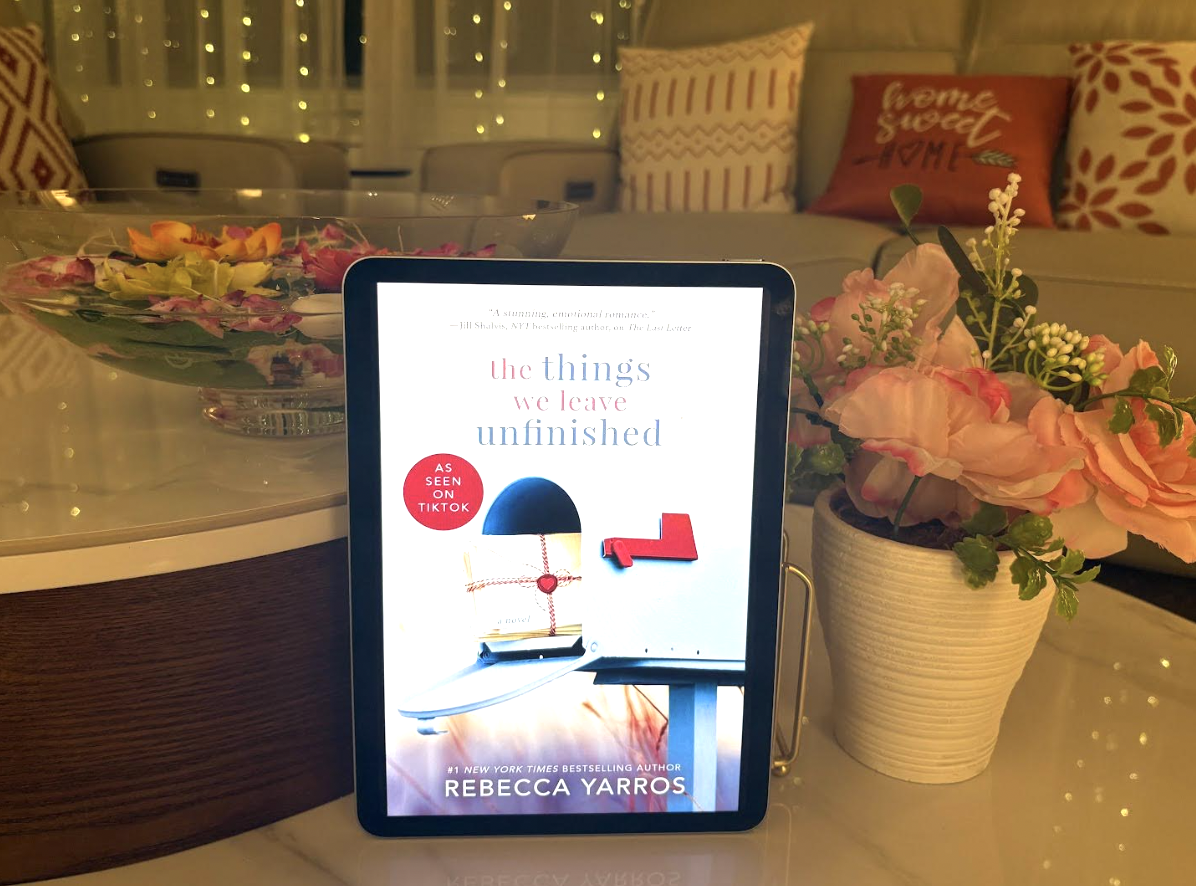
If you enjoy romance novels with dual timelines, complicated characters, and stories that break your heart before putting it back together, Rebecca Yarros’ The Things We Leave Unfinished deserves a spot on your reading list. By giving five different perspectives and using two distinct timelines spanning World War II and the present day, this book offers a beautiful exploration of love and grief.
Rebecca Yarros is known for writing emotional romances that leave readers in tears, gaining widespread recognition for her romance series Fourth Wing, this novel follows her successful 2019 novel The Last Letter, The Things We Leave Behind. It’s yet another touching story solidifying her place as a bestselling author.
The novel begins with the life of George Stanton, the great-granddaughter of Scarlett Stanton, a renowned romance author who passed away before publishing her last manuscript. The manuscript is not merely a work of fiction but Scarlett’s diary, capturing her first love. When Georgia is asked to complete Scarlett’s last book, she is forced to work alongside Noah Harrison, a blunt and emotionally closed-off writer who is as attractive as he is frustrating.
Beyond the plot, it’s the dual timeline that truly captivates you, adding layers of depth and making the story even more engaging. Scarlett’s love story unfolds in London during World War II, where she works with the air force and meets James Stanton, an American stationed there to fight. With James’ life constantly on the line, the story portrays the true meaning of love and how it perseveres under extraordinary circumstances.
At the same time, Georgia’s present-day storyline explores a different set of challenges. Her inability to trust those around her has caused her to become emotionally closed off, even with the people who care about her most. From her strained relationship with her selfish mother to her divorce from an unfaithful husband, Georgia struggles to believe in love again.
Going into the novel, I worried that the dual timelines might feel confusing and clunky, or even make it harder to stay equally emotionally invested in each story. Instead, the structure had the opposite effect, making the narrative feel more personal and the emotional moments more significant.
While reading the novel over the summer, I found myself deeply invested in both timelines, often pausing to collect myself. Scarlett’s and James’ love is portrayed with such tenderness and sincerity that, even after decades of hardship and loss, their bond never truly fades. At the same time, Georgia’s gradual emotional growth with Noah brings a sense of hope that balances the story’s heartbreak. Watching her learn to trust and love again feels almost symbolic, as though she is finally living out the happily-ever-after Scarlett never got. Together, these parallel stories drew out every emotion in me, from grief to healing.
Overall, The Things We Leave Unfinished is a romance novel that delivers closure not only to Scarlett’s unfinished love story but also to Georgia’s own journey. For readers who enjoy a good cry or are drawn to novels that explore deep themes such as the endurance of love, The Things We Leave Unfinished offers a moving and memorable reading experience. I wouldn’t hesitate to recommend it.